

As software and automation reshape the traditional office, asking “Is Barbering a Good Career in 2026” reveals a surprising reality about the barber job outlook. Industry data projects a $100 billion market, elevating barbers from basic haircutters into highly specialized groomers focused on precision hair and skin care.
Examining the future of the men’s grooming industry points directly toward entrepreneurial freedom. Modern professionals operate through a “micro-business” lens—meaning they manage their own schedules, client marketing, and shop-within-a-shop finances just like independent freelance creators.
Financial returns in this field routinely rival corporate salaries without the crushing burden of a four-year student loan debt. Because physical trades are inherently AI-proof, stepping behind the chair offers profound economic stability that a robot simply cannot replicate.
Why Your Clippers Are “Robot-Proof”
Many workers worry about the impact of automation on hair cutting services, but algorithms cannot replicate the nuanced touch of a human hand. You simply cannot download a fresh look.
The secret to this job security lies in the physical complexity of the human head. A machine struggles with different textures, cowlicks, and skin sensitivities, making professional grooming an exclusively human art. Precision grooming—the highly detailed, customized shaping of hair and facial hair—stands as a high-value skill robots cannot master.
Beyond technology, many wonder if the barbering profession is recession-proof during economic downturns. History shows that even when budgets tighten, individuals consistently prioritize their personal appearance for job interviews and basic self-esteem. A sharp look is an affordable luxury, meaning neighborhood shops keep their chairs filled when other industries stall.
Combining this immunity to artificial intelligence with steady consumer demand creates a powerful foundation for career longevity. If you want a future where your skills are safe from outsourcing, the financial path forward is incredibly clear.
The Math Behind the Chair
Unlike traditional degrees that often lead to severe debt, this trade offers a rapid path to profitability. When weighing your barber school tuition cost vs. earning potential, the math heavily favors the student. Programs typically cost under $20,000 and finish in a matter of months, creating an incredibly short time-to-income ratio compared to conventional office careers.
Transitioning into the shop requires choosing how you get paid, moving far beyond standard hourly or salary models. You must weigh the pros and cons of renting a barber chair—paying a flat weekly fee to lease your workspace—against a commission split where the shop owner takes a percentage. The flat-fee “booth rent” option acts like a micro-business that lets you keep all profits, pushing the average annual income for self-employed barbers much higher once they build a steady clientele.
Hitting that first $70k milestone requires looking beyond the clippers. Savvy professionals excel at diversifying revenue streams through retail hair products, which can easily boost your annual take-home pay by 15 percent. A balanced income strategy relies on three foundational pillars:
- Base service fees: The standard, recurring charges for your daily haircuts.
- Retail product commissions: The direct profits from selling styling pomades or beard oils.
- Specialized service premiums: The higher rates commanded by luxury add-ons like hot-towel shaves.
Mastering these financial levers transforms a standard service job into a lucrative personal business.
Career Paths
Choosing an educational route requires distinguishing between the licensed barber and cosmetologist career paths. While both require state certification to ensure public safety, their daily focus differs significantly:
- Barbers focus on precision short-hair cutting and are uniquely certified to use straight razors for facial shaves.
- Cosmetologists specialize in chemical treatments, like hair coloring, and generally cater to a longer-haired clientele.
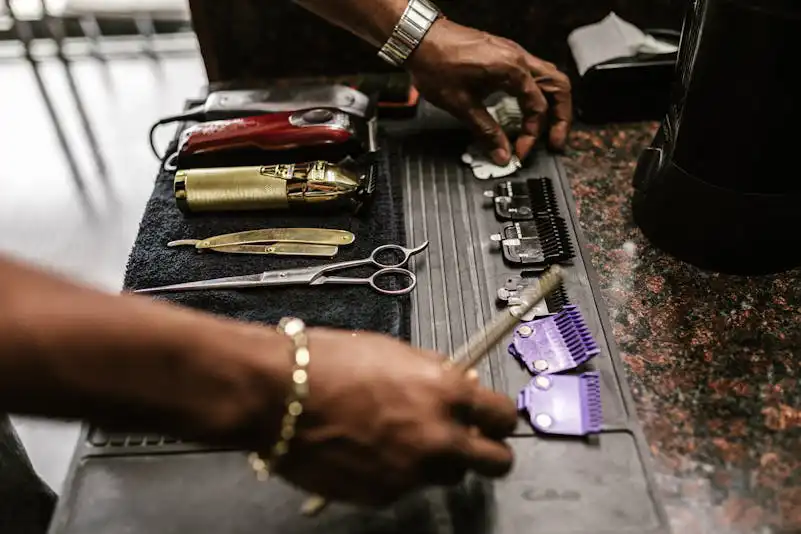
Once certified, you are not confined to a traditional brick-and-mortar storefront. The massive growth of mobile barbering services for 2026 allows professionals to bring the shop directly to a client’s home or office. Capitalizing on this lucrative trend requires investing in the essential tools for a modern barbering business, such as heavy-duty cordless clippers, portable lighting rings, and specialized sanitary travel cases.
Regardless of where you set up your workspace, protecting your physical wellbeing is critical for career longevity. Standing all day takes a toll, making ergonomic health as a barber a top priority. Professionals prevent joint injury by wearing supportive footwear, standing on anti-fatigue mats, and practicing proper body mechanics—like adjusting the chair height rather than bending their spine over the client. A healthy body and the correct state certifications create a powerful foundation for your personal enterprise.
Branding and Continuing Education
Your physical workspace is just the beginning; your most critical asset in 2026 is your digital storefront. Successfully building a personal brand as a barber on social media acts as a 24/7 visual resume. Modern professionals follow a simple three-step acquisition plan: post high-quality before-and-after photos, use local city hashtags to target nearby residents, and reply to comments to build community trust before an appointment is even booked.
Attracting clients is essential, but retaining them requires a commitment to lifelong learning. The grooming market heavily rewards expertise, making continuing education for advanced hair styling techniques crucial for commanding premium prices. By mastering 2026’s trending services—like hybrid textured crops or specialized hot-towel facial treatments—at a trusted institution such as Quality Barber College, you ensure your abilities never become outdated. This continuous upgrading turns a standard haircut into a luxury experience, creating a highly secure, profitable micro-business that you control.
Barber Chair
Stepping behind the chair provides true autonomy and lasting community impact, moving beyond a computer screen to build real, human connections.
To transition into this field, research your local market and enroll in a reputable program. Finish your practical hours, pass the state licensing exams, and begin building your initial client base. As your schedule fills, diversifying your income and prioritizing your physical ergonomics will help establish a healthy work-life balance in the professional grooming industry.
A career in barbering offers a powerful lifestyle shift for those seeking work where income ties directly to skill, providing a roadmap to launch a thriving, AI-proof business built with your own two hands. So, if you’re asking Is Barbering a Good Career in 2026, the answer is increasingly yes for motivated professionals.
Q&A
Question: Why is barbering considered “robot-proof” and resilient during recessions?
Short answer: The work relies on human touch and judgment that algorithms can’t replicate. Hair textures, cowlicks, and skin sensitivities demand on-the-spot adjustments and nuanced technique—far beyond what a machine can handle. Even in downturns, people prioritize looking sharp for interviews and self-esteem, making grooming an “affordable luxury” that keeps chairs filled. Together, AI immunity and steady demand create strong long-term security.
Question: What does the cost-to-earnings path look like, and how do barbers reach their first $70k?
Short answer: Barber programs typically cost under $20,000 and finish in months, creating a short time-to-income compared to four-year degrees. Hitting $70k comes from more than haircuts: combine base service fees, retail product commissions (which can add roughly 15% to take-home), and higher-priced premium services like hot-towel shaves. Mastering these three levers turns a basic service role into a profitable personal business.
Question: Should I choose booth rent or a commission split when I start?
Short answer: Booth rent is a flat weekly fee that lets you operate like a micro-business and keep all profits—best once you have steady clients and want control over pricing, scheduling, and marketing. Commission splits reduce upfront risk because you pay a percentage instead of rent, which can help while you’re building a clientele. Pick based on your current client volume, cash flow, and comfort running independent finances.
Question: What’s the difference between a licensed barber and a cosmetologist, and how does that affect my services?
Short answer: Barbers specialize in precision short-hair cutting and are uniquely certified to use straight razors for facial shaves. Cosmetologists focus on chemical services such as coloring and typically work with longer-haired clients. Both require state certification, so choose the path that aligns with the services and clientele you want to serve.
Question: Do I need a traditional shop in 2026, and how do I grow my client base?
Short answer: No—mobile barbering is booming. You can bring services to homes and offices with the right kit: heavy-duty cordless clippers, portable ring lighting, and sanitary travel cases. To attract clients, build a digital storefront: post high-quality before/after photos, use local city hashtags, and reply to comments to earn trust. Retain clients and command premium prices through continuing education—master trending services like hybrid textured crops and specialized hot-towel facial treatments at reputable programs (e.g., Quality Barber College). Also prioritize ergonomics—supportive footwear, anti-fatigue mats, and proper chair height—to protect your body for the long haul.
Quality Barber College
713-900-4722
12363 S Main Street
Houston, TX 77035
View Google Business Listing