

The modern barbering industry is more diverse and dynamic than ever before. To truly stand out and build a loyal clientele, a professional barber must be equipped to handle every hair type that walks through the door. Mastering Textured Hair and Specialty Barbering Skills is not just an added bonus to your resume—it is an absolute necessity.
Working with waves, curls, and coils requires a unique set of techniques, specialized tools, and a deep understanding of hair health. Whether you are executing a flawless fade or providing high-end grooming services, understanding the intricacies of textured hair will elevate your craft.
Understanding the Foundations of Textured Hair
Before the clippers even turn on, a master barber must analyze the canvas. Treating every head of hair the same will result in uneven cuts and unhappy clients.
The Importance of Curl Pattern Identification
Proper curl pattern identification for barbers is the first step in delivering a tailored haircut. Hair textures generally range from Type 1 (straight) to Type 4 (coily or kinky). Recognizing whether a client has loose Type 3 curls or dense Type 4 coils dictates your approach to cutting, styling, and product application.
One of the most common questions from new professionals is: why does coily hair require low tension cutting? The answer comes down to “shrinkage.” Coily hair acts like a tightly wound spring. If you pull the hair tightly (high tension) while cutting, it will shrink back significantly once released, resulting in a much shorter and often uneven haircut. Using a low-tension or freehand technique ensures the hair sits naturally and evenly when dry.
Essential Prep: Detangling and Moisture
Textured hair thrives on moisture, and preparing the hair correctly makes the cutting process smoother for both the barber and the client.
Hydration and Detangling
Attempting to run a comb or clipper through dry, tangled curls is a recipe for pain and breakage. Implementing gentle detangling methods for professional barbering is crucial.
- Use the Right Tools: Always use a wide-tooth comb or a specialized detangling brush.
- Work Bottom to Top: Start detangling at the ends of the hair and gently work your way down to the roots.
- Apply a Leave-In: Lightly misting the hair with a leave-in conditioner or water makes the process seamless.
Furthermore, a great barber educates their clients. Recommending moisture retention strategies for men’s hair—such as using hydrating curl creams or sleeping with a silk durag—helps clients maintain their style between visits. This goes hand-in-hand with promoting scalp hydration and follicular health, as a well-moisturized, healthy scalp is the foundation for strong, resilient hair growth.
Advanced Cutting and Fading Techniques
When it comes to the actual cut, textured hair requires precision, patience, and a masterful understanding of volume and blending.
Nailing the Fade and Taper
Executing flawless fading techniques for type 4 hair requires a delicate touch. Because coarse, dense hair creates dark silhouettes, blending must be meticulous to avoid visible guidelines.
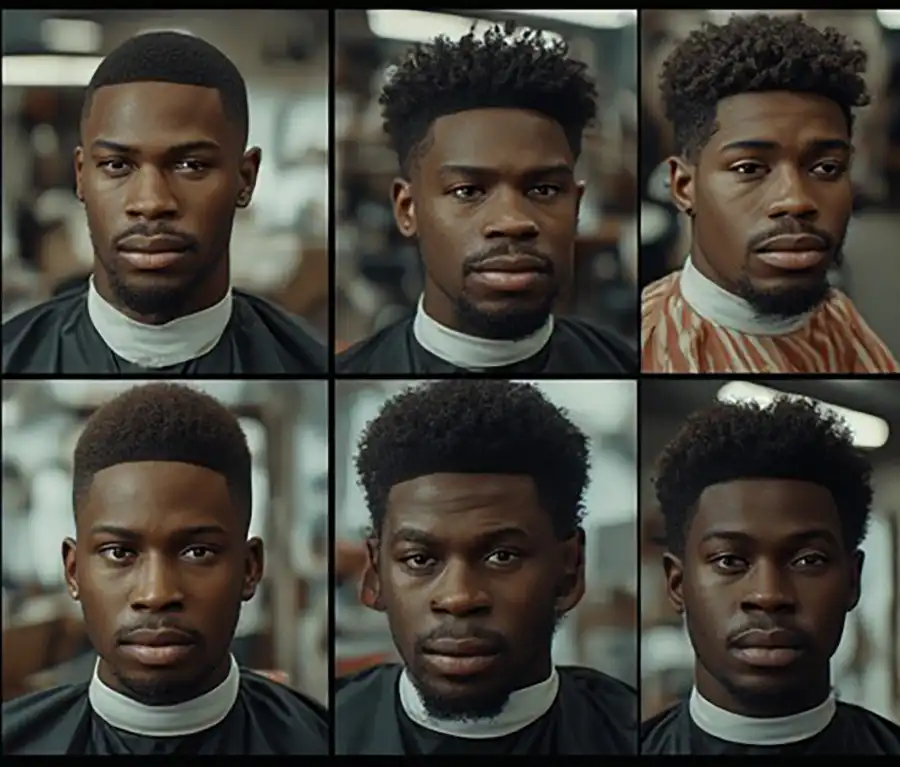
When a client requests a taper, managing hair density during a taper is a true test of a barber’s skill. You want to create a seamless transition at the temples and nape while tapering thick hair without losing volume at the parietal ridge. This creates that highly sought-after “boxy” or rounded silhouette that perfectly frames the face.
For clients with natural waves, you will often need to decide between a skin fade vs shadow fade for wavy hair. While a skin fade offers a stark, high-contrast look, a shadow fade (leaving a slight stubble at the shortest point) often complements waves better, as it preserves the dark, continuous flow of the wave pattern around the sides of the head.
Scissor Work and Clipper Mastery
Clippers are a barber’s best friend, but choosing the right attachments is vital. Proper clipper guard selection for thick curls prevents the blades from snagging. Premium magnetic guards with longer teeth feed thick hair into the cutting blade smoothly without pulling.
For the longer hair on top, relying solely on clippers can sometimes result in a choppy look. Integrating shear-over-comb techniques for coiled hair allows you to gently sculpt the shape, remove bulk, and texturize the tips without disrupting the natural curl pattern.
Sharp Lineups and Coarse Beard Shaping
A haircut is only as good as its finish. The lineup and beard trim are where a good cut transforms into a masterpiece.
Achieving a crispy, ash-line edge requires preparation and precision. Using the best tools for lining up textured hairlines—typically a high-quality T-blade trimmer that has been properly zero-gapped—ensures clean lines. Always brush the baby hairs forward and apply a light holding spray before edging to lock the hair in place.
When moving to the face, shaping beards with coarse hair texture requires a strategic approach. Coarse beard hair can be unruly. Always comb the beard thoroughly, use freehand clipper techniques to shape the bulk, and trim with the grain to prevent skin irritation.
Skin Health and Post-Shave Care
Men with textured hair are often more susceptible to skin irritation, razor bumps (pseudofolliculitis barbae), and ingrown hairs due to the curly nature of the hair growing back into the skin.
Knowing how to prevent razor bumps on sensitive scalps and necks is a premium skill.
- Preparation: Always use a hot towel to open pores and soften the hair.
- Lubrication: Apply a high-quality pre-shave oil and a rich lather.
- Technique: Shave with the grain using short, light strokes. Never stretch the skin too tightly, as this cuts the hair below the skin line, leading to ingrowns.
Finally, wrap up the service with proper post-shave care for ingrown hair prevention. Use a cold towel to close the pores, followed by an astringent (like witch hazel) and a soothing, alcohol-free aftershave balm to calm the skin and prevent bacterial buildup.
Elevate Your Barbering Career
Mastering the art of textured hair takes education, practice, and a commitment to excellence. As the industry evolves, the barbers who invest in learning specialized techniques are the ones who build the most successful and lucrative careers.
If you are ready to master these advanced methods and build a rock-solid foundation in the barbering industry, Choose Quality Barber College. With expert instructors and hands-on training, you will learn everything from precise fading to top-tier skin care.
Take the next step in your professional journey and discover how you can refine your craft. Visit https://qualitybarbercollege.com/ today to learn more about our programs and start your path toward becoming a highly sought-after master barber.
Quality Barber College
713-900-4722
12363 S Main Street
Houston, TX 77035
View Google Business Listing