

If you are searching for a Houston Barber School, chances are you are doing more than casually researching barbering.
You may be ready for a career change.
You may already cut hair for friends and family and want professional training.
You may be graduating from high school and looking for a hands-on career path instead of a traditional four-year college.
Or you may already be working full time and wondering whether you can realistically attend barber school without giving up your current income.
Whatever brought you here, choosing the right barber school is an important decision.
You need more than a place where you can accumulate required training hours. You need practical instruction, hands-on experience, preparation for Texas licensing requirements, scheduling that fits your life, and an environment where you can develop confidence behind the chair.
Quality Barber College provides professional barber education in Houston at 12363 S Main Street, Houston, TX 77035. Its Class A Barber program combines classroom theory, mannequin training, hands-on clientele experience, and preparation for the state licensing process.
If your goal is to become a professional barber in Houston, the first step is understanding what barber school actually involves and what you should look for before enrolling.
Looking for a Houston Barber School? Start With the License Requirements
Before comparing tuition, schedules, or locations, understand the goal.
If you want to work professionally as a Class A Barber in Texas, you must satisfy Texas licensing requirements.
According to the Texas Department of Licensing and Regulation, students following the standard barber-school path must complete a 1,000-hour Class A Barber course at a Texas-licensed barbering or cosmetology school. Applicants must also satisfy the applicable written and practical examination requirements before obtaining the license.
That makes choosing your school important.
You are not simply learning how to perform a fade.
You are preparing for a regulated profession.
Your education should help you develop the practical barbering skills, sanitation knowledge, professional habits, and state-exam readiness needed to move toward licensure.
Quality Barber College’s Class A Barber Program
Quality Barber College offers a Class A Barber Program in Houston consisting of 1,000 clock hours of instruction.
The college currently structures the program at approximately:
30 weeks for full-time students at 34 hours per week
or
50 weeks for part-time students at 20 hours per week.
The curriculum combines theory with practical mannequin work and hands-on clientele practice.
That combination matters because barbering is not a career you can learn by reading alone.
You have to develop control of your tools.
You have to understand how different hair textures respond.
You have to learn how to blend.
You have to improve your speed.
You have to communicate with clients.
And you have to repeat techniques until they become consistent.
A professional barber needs knowledge and practical ability.
What Do You Learn in Houston Barber School?
Many people think barber school is primarily about learning fades.
Fades are certainly important in today’s barber industry, but professional training covers much more.
Quality Barber College’s published Class A Barber curriculum includes instruction and practical work related to areas such as men’s haircutting and tapering, shaving, mustache and beard trimming, hair coloring, shampooing and conditioning, facial treatments, styling, barber laws and other subjects required within the curriculum.
Haircutting
The foundation of barbering is learning how to create consistent haircuts for clients with different preferences, hair types, textures, lengths, and styles.
A student needs repetition.
The first haircut you perform will not look like the hundredth.
Practice helps you develop better control, consistency, efficiency, and confidence.
Fades and Tapers
Modern clients frequently request fades and tapers.
But knowing what a fade looks like is different from being able to create a clean one.
Students need to learn how to transition between lengths, eliminate unwanted lines, control their clippers, use guards effectively, and create a balanced finished appearance.
Beard and Mustache Grooming
Facial-hair services are an important part of professional barbering.
Clients may request beard shaping, trimming, lineups, mustache grooming, or combinations of services.
Attention to detail can make the difference between an average service and one that brings the client back.
Shaving
Traditional shaving remains part of barber education.
Students need to understand appropriate procedures, sanitation, client safety, skin preparation, tool handling, and service techniques.
Sanitation and Safety
A barber works directly with people all day.
Professional sanitation is therefore not optional.
Students need to develop habits involving proper cleaning, disinfection, tool handling, work-area maintenance, and compliance with applicable state requirements.
Client Communication
A barber can have excellent technical skills and still lose clients because of poor communication.
Before beginning a service, you need to understand what the client actually wants.
That means asking questions.
How low do you want the fade?
How much length should remain?
How do you normally style your hair?
Would you like the beard shaped?
Are there areas you do not want cut too short?
Good communication helps prevent misunderstandings.
Hands-On Barber Training Matters
You can watch hundreds of barber videos online.
You can follow talented barbers on Instagram.
You can study tutorials.
You can watch someone perform a perfect fade repeatedly.
But at some point, you have to pick up the clippers yourself.
Barbering is a hands-on trade.
Professional skill comes from actually doing the work.
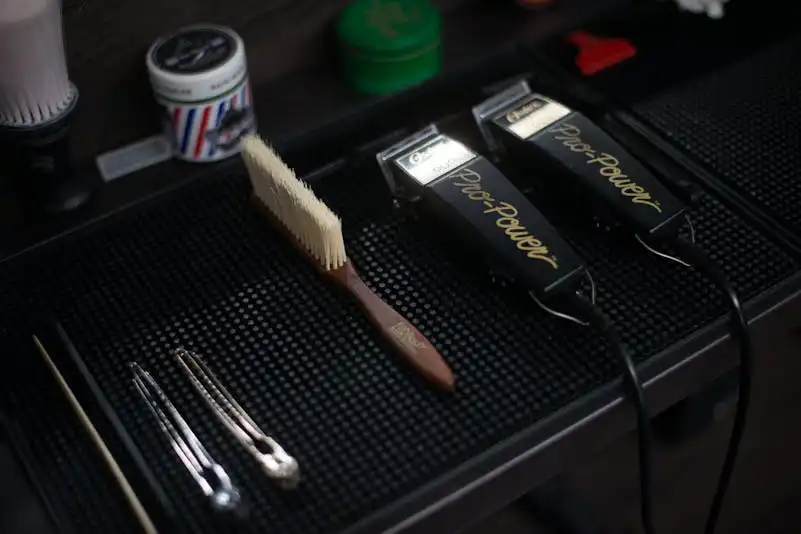
Quality Barber College states that its Class A Barber curriculum includes theory instruction, mannequin practice, and hands-on clientele training.
That experience gives students the opportunity to work on skills such as:
- Clipper control
- Cutting
- Tapering
- Blending
- Lineups
- Beard grooming
- Shaving
- Client consultations
- Working with different hair textures
- Sanitation
- Time management
- Professional communication
The goal is not simply to know what should happen.
You need to develop the confidence to perform the service.
Can You Attend Houston Barber School While Working?
This is one of the biggest concerns for adult students.
You may want to become a barber but still have:
- Rent
- A mortgage
- Car payments
- Children
- Family responsibilities
- A full-time job
- A part-time job
- Other financial obligations
You cannot necessarily quit working tomorrow simply because you want a new career.
That does not automatically mean barber school is impossible.
Quality Barber College currently offers full-time and part-time scheduling options. Its published program information lists the Class A Barber course at approximately 30 weeks full-time or 50 weeks part-time. The college also currently publishes part-time day and evening scheduling options for students balancing training with other responsibilities.
Before enrolling, review the current Quality Barber College Class Schedule and talk directly with admissions about which option works with your life.
Schedules can change, so always confirm current class times before making your decision.
Full-Time vs. Part-Time Barber School
Neither option is automatically better.
The right schedule depends on your circumstances.
Full-Time Barber School May Be Right for You If:
You are ready to make training your primary focus.
You have enough flexibility to attend a higher number of hours each week.
You want to complete the 1,000-hour program more quickly.
You have arranged your finances, transportation, and family responsibilities around school.
Part-Time Barber School May Be Better If:
You need to continue working.
You have children or family responsibilities.
You need a more manageable weekly schedule.
You are making a career change but cannot immediately leave your current job.
You are comfortable taking longer to complete the required training hours.
What matters most is choosing a schedule you can realistically maintain.
Starting aggressively and then repeatedly missing school may not move you toward your goal as effectively as choosing a sustainable schedule from the beginning.
Barber School for Working Adults
Many Houston adults reach a point where they begin asking:
Do I want to do my current job for the next 10 or 20 years?
Maybe you work in a warehouse.
Retail.
Food service.
Transportation.
Customer service.
Construction.
Security.
An office.
Or another career that simply does not feel like your long-term destination.
Changing careers does not always mean returning to school for four years.
Barber school offers a skill-focused path centered on learning a trade.
For someone who enjoys working with people, working with their hands, personal style, grooming, creativity, and building relationships, barbering can be worth exploring.
You do not need to already be an experienced barber before enrolling.
That is why you attend school.
What Should You Look for in a Houston Barber School?
Houston has multiple barber-training options.
Do not choose solely because one school appeared first in search results.
Compare the things that will actually affect your education.
Is the Program Designed Around Texas Requirements?
If your goal is Texas licensure, make sure the program is aligned with the applicable Texas training requirements.
Does the School Provide Hands-On Training?
Barbering is practical.
Ask how students progress from theory to mannequins and eventually to clientele practice.
Are Multiple Schedules Available?
A great program does not help much if you cannot attend consistently.
Ask about full-time and part-time options.
Will You Learn More Than Haircutting?
Professional barbering also involves sanitation, client interaction, grooming services, state laws, professional habits, and business awareness.
Does the School Help Prepare Students for Licensing?
Completing school hours is part of the process.
Students should also understand the examination and application process required by Texas.
Can You Visit Before Enrolling?
A campus visit can tell you things a website cannot.
Look at the environment.
Meet staff.
Ask questions.
See where students train.
Imagine yourself attending there every week.
Admissions: What Do You Need to Enroll?
Before deciding that barber school is your next move, make sure you understand the school’s current admission requirements.
Quality Barber College’s Admissions Information currently states that applicants must meet its published educational and identification requirements, including documentation such as a valid government-issued ID. Prospective students should review the current requirements directly with the admissions team before enrollment.
If you are interested in applying, do not wait until the day you want classes to begin before gathering your paperwork.
Contact admissions early and ask:
What documents do I need?
When can I start?
Which schedules are currently available?
What is the total program cost?
What payment options are currently available?
What supplies will I need?
When should I tour the school?
Getting these answers early helps you plan.
How Long Does Barber School Take in Houston?
For the standard Texas Class A Barber school path, TDLR currently requires 1,000 hours of approved instruction.
How quickly you complete those hours depends on your attendance schedule.
At Quality Barber College, the currently published program length is approximately:
30 weeks full-time
and
50 weeks part-time.
That means someone serious about changing careers does not necessarily have to spend several years in school before moving toward the licensing process.
But completion requires commitment.
Barber school works best when you treat attendance like a professional responsibility.
Show up.
Practice.
Ask questions.
Accept correction.
Improve.
Repeat.
The hours are not simply something to get through.
They are your opportunity to build skill before clients begin paying you for it.
What Happens After Barber School?
Finishing your 1,000 training hours is an important accomplishment, but graduation from school is not automatically the same thing as holding a Texas barber license.
TDLR currently requires Class A Barber applicants to complete the required education and satisfy written and practical examination requirements before applying for the license.
That is why state-board preparation matters.
A strong student should understand that there are several stages:
Complete your required education.
Prepare for the examinations.
Satisfy examination requirements.
Apply for licensure.
Then begin building your professional career.
Your school should help you understand what comes next instead of letting graduation day be the first time you think about licensing.
What Can You Do After Becoming a Licensed Barber?
Barbering can lead in different directions depending on your goals, experience, local laws, and business strategy.
A new barber might begin by working in an established barbershop.
That can provide an opportunity to gain experience, improve speed, learn shop culture, and begin developing a regular clientele.
As your experience grows, you may eventually explore goals such as:
- Building your own client book
- Developing a personal barber brand
- Renting or leasing space where appropriate
- Specializing in particular styles or grooming services
- Building a social media following
- Continuing advanced education
- Moving into shop management
- Eventually exploring barbershop ownership
You do not need to decide your entire career path during your first week of barber school.
Start with becoming skilled.
Then become consistent.
Then build your reputation.
Barbering Is Also a Customer-Service Business
A technically excellent haircut matters.
But clients also remember how you treated them.
Did you start the appointment on time?
Did you listen?
Was your station clean?
Did you communicate professionally?
Did the client feel comfortable?
Did you remember how they like their haircut?
Would they recommend you to someone else?
A successful barber is building relationships every day.
One satisfied customer can become a regular customer.
A regular customer may bring a child.
Then a friend.
Then a coworker.
Over time, professional relationships can become the foundation of a barber’s clientele.
That is why barber education should help students think beyond clipper technique.
Social Media Has Changed How New Barbers Can Build a Brand
Today’s barber has marketing opportunities that did not exist for previous generations.
Your work can become your portfolio.
A clean before-and-after photograph can showcase your ability.
Short videos can demonstrate transformations.
Social platforms can help potential customers discover your style and personality.
But marketing cannot replace skill.
A great Instagram page may bring someone into your chair once.
Quality work and customer service are what encourage that person to return.
While you are in barber school, begin thinking about the professional reputation you eventually want to build.
Do you want to specialize in fades?
Beard grooming?
Classic barbering?
Children’s cuts?
High-end grooming?
A broad family clientele?
Your technical foundation comes first, but your long-term brand can evolve as your skills improve.
How Much Does Houston Barber School Cost?
Cost is an important part of the decision.
Do not enroll without understanding the total financial commitment.
Ask the school for current information about:
- Tuition
- Registration costs
- Required tools or kits
- Books or educational materials
- Uniform or dress requirements
- Licensing-related expenses
- Payment arrangements
- Any financial-assistance options for which you may qualify
Do not make your decision solely on the lowest advertised tuition.
Compare what the program offers.
A barber education is intended to prepare you for a professional career.
The relevant question is not simply:
“Which school costs the least?”
It is:
“Which program fits my budget, schedule, learning needs, and career goals?”
Should You Tour the Barber School Before Enrolling?
Yes.
If possible, visit before making your decision.
A tour gives you an opportunity to evaluate the training environment for yourself.
During your visit, ask to learn more about:
- The Class A Barber curriculum
- Student work areas
- Hands-on training
- Full-time schedules
- Part-time schedules
- Attendance expectations
- Enrollment requirements
- State licensing preparation
- Tuition and payment options
- Supplies
- Start dates
Bring your questions with you.
Do not be afraid to ask specific questions.
You are making a career decision.
You should understand what you are enrolling in.
Frequently Asked Questions About Houston Barber School
How many hours does barber school require in Texas?
Texas TDLR currently requires students following the standard Class A Barber school path to complete a 1,000-hour Class A Barber course at a Texas-licensed school.
How long is Quality Barber College?
Quality Barber College currently lists its Class A Barber program as approximately 30 weeks full-time or 50 weeks part-time.
Does Quality Barber College offer part-time barber school?
Yes. Quality Barber College currently publishes part-time scheduling options designed for students who need greater flexibility. Prospective students should verify the current schedule before enrolling.
Can I attend barber school while working full time?
Potentially, yes. The feasibility depends on your work hours, travel time, family responsibilities, and the school schedule. Quality Barber College currently offers part-time options, including scheduling designed for working students.
Do I have to know how to cut hair before barber school?
No. Professional barber training is intended to develop your skills through education and practical experience.
Coming to school ready to learn, practice, receive feedback, and improve is more important than already knowing how to perform professional services.
Does barber school include hands-on training?
Quality Barber College’s published Class A Barber program combines theory, mannequin work, and hands-on clientele practice.
Do I automatically become licensed after graduating?
No. Completing the required education is one part of the Texas licensing process. TDLR also requires applicable examinations and a license application.
Can I eventually own a barbershop?
Barber training can provide the technical foundation for a professional barbering career. Operating a barbershop also involves additional business, regulatory, licensing, financial, and management responsibilities.
Where is Quality Barber College located?
Quality Barber College is located at 12363 S Main Street, Houston, TX 77035.
How do I get started?
Contact the college, discuss your goals with admissions, review the current schedule, ask about program costs and requirements, and schedule a campus visit before deciding whether to enroll.
Don’t Spend Another Year Thinking About Becoming a Barber
Many future barbers spend months—or years—thinking about starting.
They watch videos.
Buy clippers.
Practice occasionally.
Follow barbers online.
Talk about opening a shop someday.
But eventually there is a difference between being interested in barbering and actually moving toward a professional career.
You have to begin.
You do not need to have your entire future planned.
You do not need to know what shop you will eventually work in.
You do not need to know whether you will someday own your own business.
Your first goal can be much simpler:
Learn the trade. Complete your training. Prepare for licensing. Develop professional skills.
Quality Barber College gives Houston-area students a structured path toward that goal through its 1,000-hour Class A Barber program and full-time and part-time training options.
If you have been searching for a Houston Barber School because you are ready to turn your interest in barbering into professional training, now is the time to learn what it takes to enroll.
Start Your Barber Career at Quality Barber College
If you are ready to explore barber school in Houston, take the next step.
Ask about the Class A Barber program.
Discuss full-time and part-time scheduling.
Review the admission requirements.
Find out about current tuition and payment options.
Schedule a tour.
And decide whether Quality Barber College is the right place to begin your professional barber training.
Contact Quality Barber College Today
Quality Barber College
12363 S Main Street
Houston, TX 77035
713-900-4722
Your barber career does not begin when you open your own shop or build a full client list.
It begins when you decide to start training.
Contact Quality Barber College today to learn more about enrolling in a Houston Barber School and taking the first step toward becoming a professional barber.