

Thinking about becoming a barber but cannot afford to quit your current job?
You are not alone.
For many adults in Houston, the biggest question about starting barber school is not whether they want a new career. It is whether they can realistically fit barber training around work, family responsibilities and everyday life.
The good news is that becoming a barber does not necessarily require putting the rest of your life on hold.
Quality Barber College offers flexible scheduling options designed to give students the opportunity to train for a barbering career while continuing to handle other responsibilities.
Whether you currently work full time, have a part-time job, support a family or simply need more flexibility than a traditional daytime school provides, barber school may be more achievable than you think.
Here is what you should know about attending barber school while working.
Can You Work While Attending Barber School?
Yes.
Many barber students continue working while completing their training.
The key is choosing a barber school that offers scheduling options that fit around your existing commitments.
A traditional school schedule that requires you to be in class all day Monday through Friday may not work for someone who already has a job.
Quality Barber College offers multiple scheduling options, including a part-time evening schedule that allows students to attend classes during the week and on Saturday.
Students interested in becoming licensed barbers can learn more about the Class A Barber Program in Houston.
The program consists of 1,000 clock hours of instruction and combines classroom education with practical, hands-on barber training.
How Many Hours Does Barber School Require in Texas?
Texas requires students seeking a Class A Barber license through the traditional training path to complete an approved 1,000-hour barber curriculum.
Quality Barber College’s Class A Barber Program meets that 1,000-hour training requirement.
The program includes instruction in areas such as:
- Haircutting
- Tapering
- Shaving
- Beard and mustache trimming
- Hair coloring
- Shampooing
- Styling
- Barbering laws and rules
- Sanitation
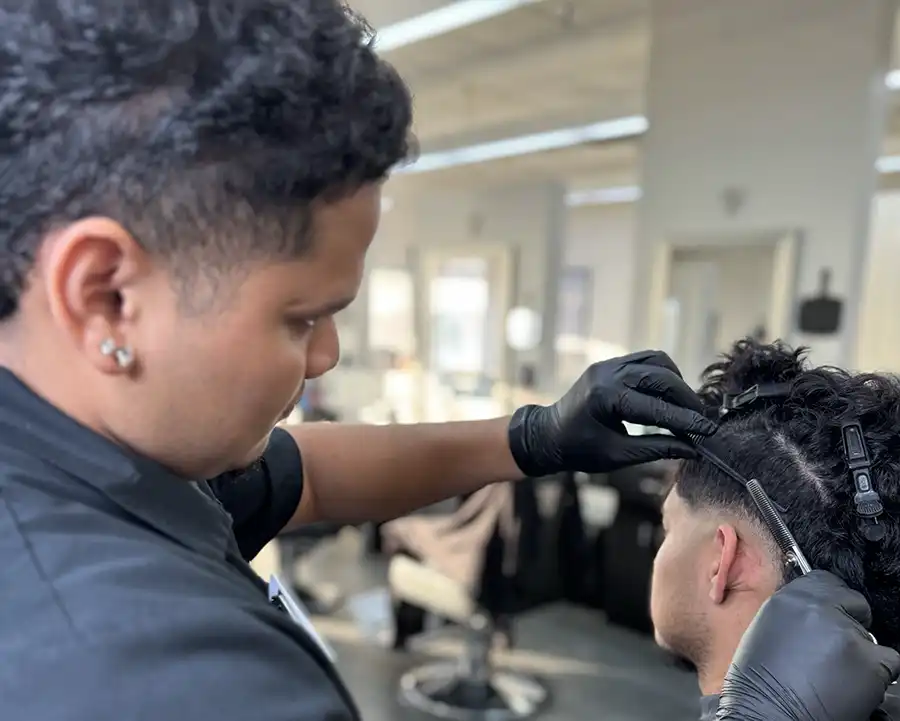
- Practical barber services
- State licensing preparation
Students do not simply sit in a classroom learning theory.
A major part of barber education involves developing the hands-on skills needed to perform services confidently and professionally.
How Long Does Barber School Take?
The amount of time required depends largely on whether you attend full time or part time.
At Quality Barber College, the Class A Barber Program is structured as:
Full-Time Program: Approximately 30 weeks
Part-Time Program: Approximately 50 weeks
Both paths lead toward completing the required 1,000 hours.
The difference is how many hours you attend each week.
That flexibility can make barber school possible for someone who might otherwise believe they do not have time to pursue a new career.
What Is the Part-Time Barber School Schedule?
Quality Barber College offers part-time scheduling designed for students who need flexibility.
Current scheduling includes a part-time day option as well as a part-time night option.
Part-Time Day Schedule
Students attend during daytime hours Tuesday through Friday, along with Saturday classes.
This option may work well for people who:
- Work evenings
- Have flexible employment
- Work overnight shifts
- Have school-age children
- Operate a small business
- Need afternoons or evenings available
Part-Time Night Schedule
Quality Barber College also offers evening classes Tuesday through Thursday, along with Saturday training.
This option can be especially valuable for students who work traditional daytime hours.
Before enrolling, review the current Quality Barber College class schedule to determine which option best fits your lifestyle.
Schedules can change, so prospective students should always confirm current class times directly with the college.
Who Is Part-Time Barber School Good For?
Part-time barber training is not only for one type of student.
It can work for people at many different stages of life.
Working Adults
You may already have a full-time job but want to build a career that gives you more independence and creative freedom.
Part-time barber school allows you to begin working toward that goal without immediately giving up your current income.
Parents
Parents often need to coordinate school, childcare, work and family responsibilities.
A flexible training schedule can make continuing education more realistic.
Recent High School Graduates
Not every high school graduate wants to attend a traditional four-year university.
Barber school offers a hands-on career education path centered around learning a skilled trade.
Career Changers
Maybe you have spent years working in retail, warehouses, transportation, food service, customer service or another industry and are ready for something different.
Your current job does not have to be your final career.
Entrepreneurs
Some students are attracted to barbering because they ultimately want to build something of their own.
According to the U.S. Bureau of Labor Statistics, a large percentage of barbers are self-employed.
That makes barbering particularly attractive to people interested in eventually controlling more of their schedule, clientele and professional direction.
Why Working While Attending School Can Be an Advantage
Working while attending barber school can certainly make your schedule busy.
But it can also have advantages.
You Continue Earning Income
You may be able to maintain your current paycheck while developing skills for your next career.
That can reduce some of the financial pressure associated with making a career change.
You Can Plan Your Transition
Instead of abruptly quitting one career and hoping the next one works out, you can prepare for barbering while maintaining your current employment.
You Develop Strong Time-Management Skills
Balancing work and barber school requires organization.
That discipline can be valuable later when managing appointments, clients and business responsibilities.
You Know Why You Are There
Working adults often enter career training with a clear objective.
You may be tired of your current industry, want more control over your future or have been thinking about becoming a barber for years.
That motivation can help keep you focused when the schedule becomes demanding.
Is Barber School Hard While Working Full Time?
It can be challenging.
Going from work to school requires commitment.
You may have less free time during your training period, and there will be days when you are tired.
But thousands of adults complete career training while working because they are focused on where they want to be next.
The important question is not whether the schedule requires effort.
It is whether the goal is important enough to make the effort worthwhile.
Before enrolling, look realistically at your weekly schedule.
Ask yourself:
- What hours do I currently work?
- Can my work schedule change unexpectedly?
- How much travel time will I need?
- What family responsibilities do I have?
- Which days are available for school?
- Can I commit to attending consistently?
- What support will I need from family?
A realistic plan is much better than simply hoping everything works itself out.
Create a Weekly Schedule Before Barber School Starts
One of the best things a working student can do is create a weekly schedule before beginning classes.
Write down your:
- Work hours
- Class hours
- Travel time
- Study time
- Family responsibilities
- Meal times
- Sleep schedule
- Personal appointments
Seeing everything on paper can help you identify scheduling conflicts before they become problems.
Treat barber school like an important appointment with your future.
The hours you spend in training are moving you toward a professional goal.
What Will You Learn in Barber School?
Professional barbering involves much more than knowing how to use clippers.
Students need both technical knowledge and practical experience.
Training may cover skills such as:
Men’s Haircutting
Students learn haircutting techniques and how to work with different hair lengths, textures and styles.
Tapering and Fading
Fades and tapers are central services in many modern barbershops.
Developing consistency requires practice.
Beard and Mustache Grooming
Professional facial-hair services require precision, sanitation and knowledge of proper techniques.
Shaving
Traditional barbering includes shaving techniques and the safe use of appropriate implements.
Sanitation
Keeping tools, equipment and work areas properly disinfected is an essential part of professional barbering.
Client Consultation
A good barber needs to understand what a client wants before beginning the service.
Communication is an important professional skill.
Barber Laws and Regulations
Students need to understand the state rules that apply to professional barbering.
State Licensing Preparation
Completing barber school is one part of the process.
Students must also prepare for the applicable Texas licensing examinations and requirements.
Hands-On Practice Matters
You cannot learn barbering only by reading a textbook or watching videos.
Watching someone perform a fade is different from holding the clippers yourself.
Real skill develops through repetition.
You need practice learning how to:
- Position your hands
- Control the clippers
- Create clean lines
- Blend different lengths
- Perform consistent tapers
- Work efficiently
- Communicate with clients
- Correct mistakes
- Improve your speed
Quality Barber College’s Class A Barber curriculum combines theory, mannequin work and hands-on practice with clientele.
That practical training helps students move from understanding a technique intellectually to being able to perform it.
What Happens After Completing Barber School?
Completing your required training hours is an important milestone, but it is not the final step.
Texas barbers must satisfy current state licensing requirements.
Students should become familiar with the process for taking required examinations and applying for licensure through the Texas Department of Licensing and Regulation.
Quality Barber College emphasizes preparing students for the State Board licensing process in addition to developing practical barbering skills.
Once licensed, graduates can begin exploring professional opportunities.
What Careers Can Barber School Lead To?
A barber license can open more than one career direction.
Graduates may pursue opportunities such as:
- Working in an established barbershop
- Building a personal clientele
- Renting a barber chair or booth
- Working in a grooming salon
- Providing specialized grooming services
- Becoming a mobile barber where legally permitted
- Developing a personal barber brand
- Eventually opening a barbershop
- Pursuing additional professional education
Your barbering career can evolve as your experience and goals change.
Some graduates may initially work for an established shop to gain experience and build clientele.
Others may eventually want to operate their own business.
Barbering Can Be a Path Toward Entrepreneurship
One reason barbering attracts so many career changers is the opportunity for entrepreneurship.
The U.S. Bureau of Labor Statistics reported that 76% of barbers were self-employed in 2024.
That does not mean everyone should immediately open a barbershop after graduating.
Running a business requires skills beyond cutting hair.
You may eventually need to understand:
- Marketing
- Customer service
- Appointment management
- Pricing
- Business expenses
- Taxes
- Branding
- Social media
- Client retention
- Inventory
- Shop management
But professional barber training can provide the technical foundation on which those business goals are built.
Social Media Has Changed the Barber Industry
Today’s barber can market their work in ways that previous generations could not.
Instagram, TikTok, Facebook and other platforms allow barbers to showcase transformations, fades, beard work, designs and other services directly to potential customers.
A strong portfolio can become a marketing tool.
As you develop your skills, you can begin learning how to photograph your work professionally and create a recognizable personal brand.
Your technical ability gets clients into the chair.
Your customer service and consistency help bring them back.
Your marketing helps new people discover you.
Successful barbering increasingly requires all three.
Is Barbering a Growing Career?
The U.S. Bureau of Labor Statistics projects employment for barbers, hairstylists and cosmetologists overall to grow faster than the average for all occupations from 2024 through 2034.
People continue to need professional grooming services regardless of changes in technology.
Hair continues to grow.
Clients continue to need haircuts.
Beards need grooming.
People continue preparing for weddings, interviews, graduations, family pictures and important events.
Barbering is a hands-on service that depends heavily on personal relationships and technical skill.
That human connection remains one of the profession’s biggest strengths.
What Makes a Successful Barber?
Graduating from barber school does not automatically make someone successful.
The barbers who build strong careers generally combine technical ability with professional habits.
Important qualities include:
Consistency
Clients want to know they can return and receive the same quality service.
Reliability
Showing up on time matters.
Communication
Listen carefully to what clients want.
Professionalism
Keep your station, tools and appearance professional.
Customer Service
People remember how you make them feel.
Continued Learning
Styles and techniques change.
Successful barbers keep improving.
Marketing
A great haircut cannot attract new customers if nobody knows you exist.
Patience
Building a loyal clientele takes time.
Barber school provides a foundation.
What you build on that foundation is ultimately up to you.
How Do You Know If Barbering Is Right for You?
Consider barbering if you enjoy:
- Working with people
- Creative work
- Hands-on learning
- Personal style
- Grooming and fashion
- Building relationships
- Seeing immediate results from your work
- Learning new techniques
- The possibility of entrepreneurship
- A career that is not spent sitting behind a desk all day
You do not need to enter barber school already knowing how to perform professional haircuts.
That is what training is for.
What matters is your willingness to learn and practice.
Don’t Wait for the Perfect Time
Many people postpone career changes because they are waiting for life to become less busy.
The problem is that life rarely becomes perfectly convenient.
There will always be bills.
There will always be responsibilities.
There will always be reasons to wait.
A flexible barber school schedule gives you another option.
Instead of asking, “Can I quit my job to go to barber school?”
Ask:
“How can I fit barber school into the life I already have?”
That small change in thinking can make a new career feel much more achievable.
Why Choose Quality Barber College in Houston?
Quality Barber College provides hands-on barber training for students throughout Greater Houston.
The college’s Class A Barber Program consists of 1,000 hours of instruction and can be completed through full-time or part-time attendance.
Flexible scheduling options give working students the ability to pursue barber education while managing other commitments.
Students receive training designed to develop barbering skills while preparing them for the Texas licensing process.
Quality Barber College serves students from Houston and surrounding areas including:
- Southwest Houston
- Alief
- Fondren
- Hiram Clarke
- Meyerland
- Missouri City
- Pasadena
- Pearland
- Reliant/NRG
- South Post Oak
- Sugar Land
- Other Greater Houston communities
The college is located at 12363 S Main Street, Houston, TX 77035.
Start Your Barber Career Without Putting Life on Hold
Working full time does not mean you have to give up on becoming a barber.
It may simply mean choosing a training schedule that works differently.
Quality Barber College offers full-time, part-time day and part-time evening options designed to help students work toward completing their barber education.
If you have been thinking about making a career change, this fall can be the time you finally begin.
You do not have to have your entire career figured out before taking the first step.
Start by learning about the program.
Review the schedule.
Visit the school.
Ask questions.
Then decide whether barbering is the right next move for you.
Contact Quality Barber College to schedule a school tour or request enrollment information.
Call 713-900-4722 to learn more about starting barber school in Houston.
Frequently Asked Questions About Part-Time Barber School
Can I go to barber school while working a full-time job?
Yes. Quality Barber College offers part-time scheduling, including evening classes, which may allow working students to complete barber training while maintaining employment.
Does Quality Barber College offer night barber classes?
Yes. The college currently offers a part-time night schedule with evening classes Tuesday through Thursday and Saturday attendance. Prospective students should confirm the current schedule before enrolling.
How many hours are required to become a Class A Barber in Texas?
The Texas Class A Barber curriculum requires 1,000 hours of approved instruction for students following the standard barber-school training path.
How long is part-time barber school at Quality Barber College?
Quality Barber College lists its 1,000-hour Class A Barber Program at approximately 50 weeks for part-time students. The full-time program is approximately 30 weeks.
What will I learn in barber school?
Training includes theory and hands-on instruction in areas such as men’s haircutting, tapering, shaving, beard and mustache grooming, sanitation and other barbering skills.
Do I need barbering experience before enrolling?
The Class A Barber Program is designed to teach students barbering skills through theory and practical training. You do not need to already be a professional barber before starting school.
Can barber school prepare me to own a barbershop?
Barber school provides the professional training needed to work toward licensure and develop your barbering skills. Owning and operating a business involves additional licensing, financial, management and business responsibilities.
Where is Quality Barber College located?
Quality Barber College is located at 12363 S Main Street in Houston, Texas 77035, serving students throughout Greater Houston.
Quality Barber College
713-900-4722
12363 S Main Street
Houston, TX 77035
View Google Business Listing